How to Choose a Local Boiler Service for Reliable Heating at Home
A dependable heating system plays an important role in keeping a property comfortable throughout the year, particularly during colder periods when households rely heavily on consistent warmth and hot water. For homeowners and landlords in Luton, arranging appropriate maintenance can also help identify developing faults before they become more disruptive or expensive to address.
Choosing a local boiler service should therefore involve more than simply selecting the first company that appears in a search. Heating systems contain numerous components that need to operate correctly together, and the quality of servicing can influence reliability, efficiency and the likelihood of unexpected problems developing later.
A suitable heating professional should be able to explain what work is required, carry out appropriate checks and provide straightforward information about anything that needs further attention. Customers should also feel comfortable asking questions about qualifications, pricing, appointments and the condition of their heating equipment.
Although this guide focuses on households and rental properties in Luton, the same principles can be applied when choosing heating professionals in almost any part of the UK.
Check Qualifications, Experience and the Standard of Work
Finding someone with the appropriate knowledge and qualifications should be one of the first considerations when arranging heating maintenance. Modern heating systems can vary considerably depending on their age, manufacturer, installation and design, so the person carrying out the work needs to understand the equipment they are inspecting.
If you are searching online for a gas boiler service near me, avoid making your decision entirely on proximity. A nearby provider may be convenient, but customers should still establish whether the engineer has the appropriate credentials and experience for the work being requested.
For gas appliances in the UK, customers can check whether an engineer is registered with the Gas Safe Register and whether they are qualified for the relevant type of gas work. Checking credentials provides a straightforward way to confirm that the individual is appropriately registered before work begins.
Experience can also be useful when dealing with older systems or recurring faults. An engineer who regularly works with different heating arrangements may be better positioned to recognise signs of wear, unusual operation or components that require closer investigation.
Professionalism should extend beyond technical knowledge. Consider whether appointments are clearly arranged, whether the engineer communicates what they are doing and whether the property is treated carefully while the work takes place.
A good visit should feel methodical rather than rushed. Customers should have an opportunity to raise concerns, particularly if they have noticed unusual noises, inconsistent heating, pressure changes or other differences in system performance.
For landlords, organised maintenance becomes especially important when managing several properties. Keeping records of previous visits and reported issues can make future maintenance easier to coordinate and can provide useful information when engineers investigate recurring problems.
Price is naturally relevant, but it should not be the only factor. A particularly low quotation may not necessarily represent better value if the scope of work is unclear. Customers should understand what is included before confirming an appointment and ask about potential additional charges where appropriate.
Taking a few minutes to check qualifications, experience and working practices can provide much more useful information than simply comparing headline prices.
Look at What Is Actually Included in the Appointment
Not every heating maintenance appointment will necessarily include exactly the same checks. Before booking, it is sensible to establish what the engineer intends to inspect and what information will be provided afterwards.
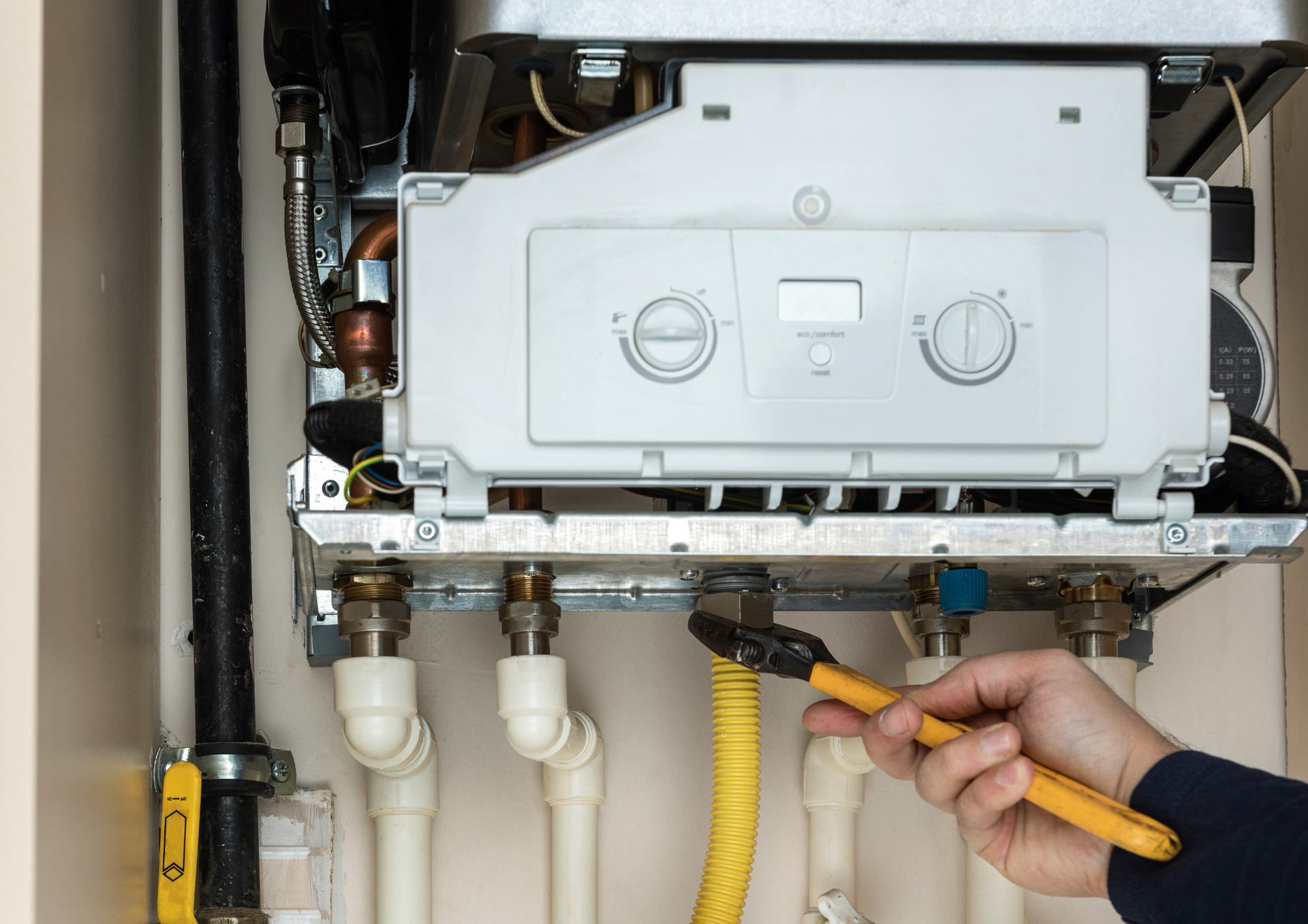
When comparing a local gas boiler service, homeowners and landlords can consider:
- Visual condition: The engineer should inspect relevant accessible parts of the appliance and look for visible signs of deterioration, damage or other concerns.
- Operating performance: The system can be checked while running so that unusual behaviour, noises or operating problems can be investigated.
- Controls: Heating controls and relevant settings may be reviewed to establish whether they are responding as expected.
- Pressure: Where applicable, system pressure can be checked and any unusual changes discussed with the customer.
- Relevant components: Accessible components may require inspection depending on the appliance, its condition and the manufacturer's guidance.
- Ventilation and flue arrangements: Appropriate checks can help establish whether relevant arrangements appear suitable and whether further attention may be necessary.
- Signs of wear: Components naturally deteriorate over time. Identifying developing wear during routine maintenance may allow repairs to be considered before a complete failure occurs.
- Customer concerns: Tell the engineer about changes you have noticed. Intermittent problems can sometimes be difficult to identify unless the customer explains when and how they occur.
- Clear findings: Once the appointment is complete, customers should receive understandable information about the condition of the system and anything that may require monitoring or further work.
Homeowners should not feel uncomfortable asking what an appointment includes. A professional provider should be able to describe the general process without relying on unnecessarily complicated terminology.
This is particularly useful when comparing quotations. Two prices may initially appear different, but the scope of the appointments may also differ. Understanding what is included provides a more meaningful basis for comparison.
It can also be useful to prepare before the engineer arrives. Make sure the appliance is reasonably accessible and note any problems you have experienced. Details such as when a noise occurs, which radiators are affected or whether pressure regularly changes can provide useful context.
For rental properties, landlords may also want to coordinate access with tenants in advance and ask whether occupants have noticed any changes in heating or hot-water performance.
A structured appointment should ultimately provide useful information about the current condition of the heating equipment rather than simply becoming another household task to tick off a list.
Consider Communication, Pricing and Ongoing Support
Technical ability is important, but the overall quality of a heating provider also depends on how clearly the company communicates with customers. This becomes particularly noticeable when a fault occurs and a homeowner needs practical information quickly.
When arranging a boiler service, consider the following points:
- Clear appointment arrangements: Customers should know when the engineer is expected and what preparation, if any, is required beforehand.
- Straightforward pricing: Ask what the quoted price covers and whether there are circumstances that could result in additional charges.
- Practical explanations: Engineers should be able to explain findings in understandable language rather than leaving customers uncertain about what has been identified.
- No unnecessary pressure: Recommendations should be explained clearly, allowing customers to understand why work may be required.
- Written information: Where appropriate, documentation can help homeowners and landlords keep track of previous maintenance and recommendations.
- Availability for questions: Customers may have questions after an appointment, particularly when further repairs or replacement parts have been discussed.
- Realistic timescales: If additional work is necessary, customers should receive sensible information about parts, availability and expected timescales.
- Respect for the property: Professional working practices include keeping the working area organised and taking reasonable care while inside the home.
- Consistent communication: If an appointment needs to change, customers should be informed rather than being left waiting without an update.
- Useful follow-up: Where further investigation is necessary, the next stage should be explained so the customer understands what happens afterwards.
These qualities become particularly valuable during colder weather. A heating problem can be inconvenient at any time, but disruption is naturally more noticeable when temperatures fall and the household depends on the system every day.
Landlords may place additional importance on communication because appointments often need to be coordinated between the engineer, property owner or managing agent and tenant. Clear arrangements can reduce missed visits and unnecessary delays.
Homeowners should also be cautious about providers who immediately recommend extensive work without adequately explaining the reason. Sometimes significant repairs are genuinely necessary, but customers should be given enough information to understand the findings and make an informed decision.
Good communication does not require complicated reports or lengthy technical discussions. It simply means providing relevant information in a clear, professional and useful manner.
Know When Routine Maintenance Is Not Enough
Routine maintenance can help keep a heating system in suitable working order, but it cannot prevent every component from eventually wearing out. Boilers, pumps, valves, controls, radiators and other parts of a heating system may develop faults as they age.
A qualified gas boiler engineer can assess reported symptoms and determine what investigation may be appropriate. Customers should describe changes as accurately as possible rather than attempting complicated repairs themselves.
Some common signs that deserve attention include unusual noises, repeated pressure loss, radiators failing to heat properly, unreliable hot water or a system that regularly stops operating as expected.
Occasional changes do not automatically mean that a major repair is required. The cause could range from a relatively straightforward adjustment to a component that needs replacement. Proper investigation is therefore more useful than trying to diagnose the problem based solely on a symptom.
Households should pay particular attention to persistent or worsening problems. A minor change that continues for several weeks may provide useful early warning that something requires attention.
Emergency situations need a different approach from ordinary maintenance. If there is a suspected gas leak or another immediate gas-related concern, occupants should follow the appropriate emergency guidance rather than waiting for a routine appointment.
For less urgent heating faults, contacting a professional promptly can still reduce inconvenience. Losing heating completely during cold weather can create practical difficulties, especially for households with young children, older residents or people working from home.
Landlords should also encourage tenants to report heating problems early. Small changes can be easier to investigate when accurate information is available about when the problem first appeared and how frequently it occurs.
The age of the equipment should also be considered. Older systems may require more frequent repairs as components wear, although age alone does not determine whether replacement is necessary. The condition of the equipment, availability of suitable parts, repair history and expected future use can all influence the decision.
Keeping basic maintenance records can help. Dates of previous visits, repairs and recurring symptoms provide useful background information when a professional investigates a new problem.
Ultimately, routine maintenance and responsive repairs perform different roles. Planned attention can help identify potential concerns, while fault diagnosis becomes necessary when the system begins behaving unexpectedly.
Choosing the right heating professional requires a balance of technical credentials, transparent communication, appropriate maintenance standards and dependable customer support. Rather than basing a decision purely on price or proximity, homeowners and landlords can benefit from understanding exactly what an appointment involves and who will be carrying out the work.
A reliable local boiler service should provide a clear process from booking through to completion. Customers should understand what has been checked, whether any concerns have been identified and what steps may be appropriate if further work is required.
For households in Luton and elsewhere, planning heating maintenance before colder weather arrives can also make appointments easier to organise. Keeping records, reporting unusual behaviour early and asking sensible questions all contribute to more informed property maintenance.
Boiler Service Luton provides useful information for homeowners and landlords looking to understand heating maintenance, system checks and repair options in the local area. Our website is designed to make choosing the right service easier to understand, without unnecessary technical language or exaggerated claims.
We focus on practical information that can help property owners recognise when maintenance may be appropriate, understand what to expect during an appointment and consider the important factors when arranging a local boiler service.
Whether you are planning routine maintenance, investigating an unexpected heating problem or simply trying to understand how to look after your system more effectively, our aim is to provide clear and relevant guidance for making informed decisions about your property’s heating.
Check out our latest X update on how to choose a
local boiler service for reliable and efficient heating at home.
Boiler Service Luton
01582 377 812
11 Peel Place, Luton
LU1 2QH
United Kingdom
You might also like